A small living room does not need miniature versions of everything. It needs a clear priority, accurate measurements and pieces that earn the space they occupy. Begin with how the room is used, then build around the largest essential item.
What should you measure first?
Draw the room with doors, windows, radiators, sockets and fixed features. Mark the main route through it. Measure furniture at its widest and deepest points, including arms, angled legs and space needed to open doors or drawers.
Add the view from the doorway and the places where people naturally pause. A room can contain the proposed furniture yet still feel cramped if the first sightline meets the side of a cabinet or a chair sits in the route to the window.
Should the sofa be small?
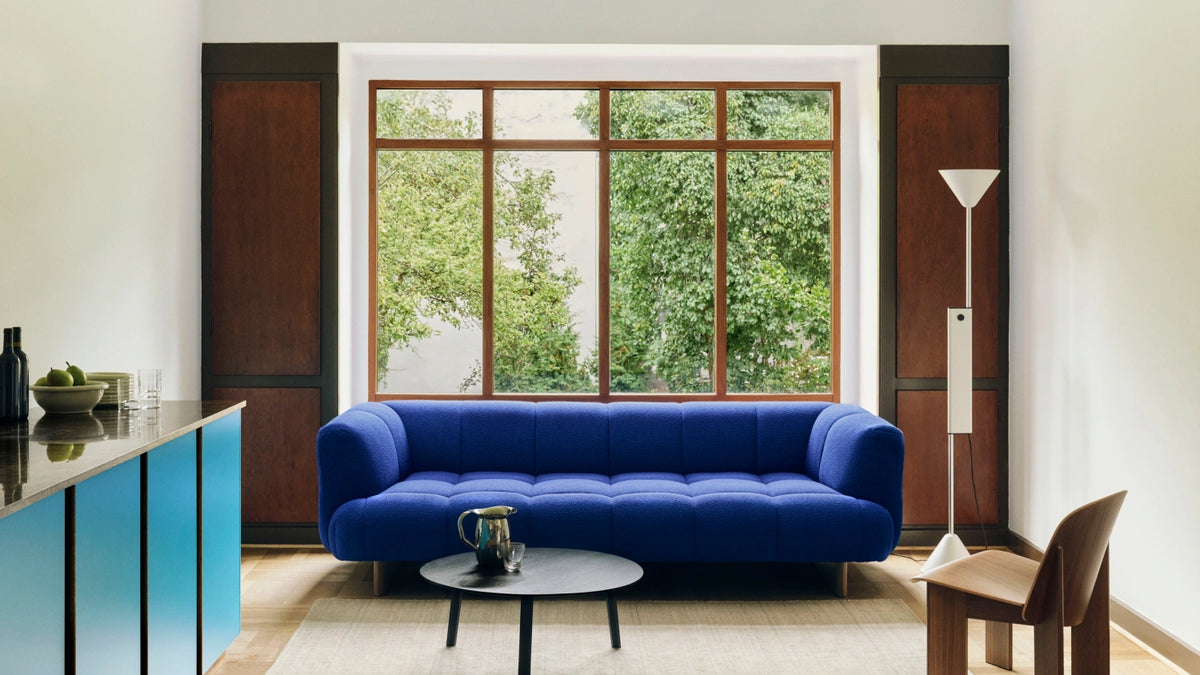
The sofa should fit the room, but several undersized seats can create more clutter than one well-proportioned sofa. Decide how many people need a proper seat every day. A compact two- or three-seat sofa with a useful seat depth may be better than a larger corner arrangement.
Compare usable seating with total width. Broad arms and deep backs can consume precious floor space without adding another place to sit. A raised base may make the room feel more open, although comfort and construction should still lead the decision.
Can a lounge chair fit?
A chair with an open frame or raised base may feel lighter than a fully upholstered design. Angle it towards the sofa to create conversation and avoid pushing every piece against a wall. Measure the complete footprint and retain a clear route past it.
What kind of table saves space?
A nest of tables, movable side table or compact round coffee table can provide surface without blocking the centre of the room. Choose a height that works with the seating and avoid bases that make the remaining floor awkward to use.
How should storage be planned?
Use wall height where appropriate and combine display with closed storage. One properly planned unit is often calmer than several small cabinets. Keep the objects used most frequently within easy reach.
Do not take every shelf to the ceiling simply because the room is small. Concentrating storage on one wall can be effective, but leave another wall quieter so the room retains some visual rest. Check the depth at shoulder height in narrow routes.
Can a large rug work in a small room?
Yes. A rug that connects the seating can make the arrangement feel more coherent than a small rug floating in the middle. Check door clearance and mark the proposed size before ordering.
How should the room be lit?
Use several compact sources rather than relying only on a central light. Wall lights, a slim floor lamp and a small table lamp can put light where it is needed without occupying every surface.
Plan sockets and switches with the furniture layout. A lamp that requires a cable across the only walkway will not remain in the intended position. Lighting a wall or curtain can add a sense of depth without introducing another bulky object.
Planning a small living room
Prioritise the main seats, protect circulation and choose flexible supporting pieces. Empty space is useful; not every wall or corner needs furniture.
Choose furniture that makes good use of the room. Explore our sofas, lounge chairs and living-room tables.