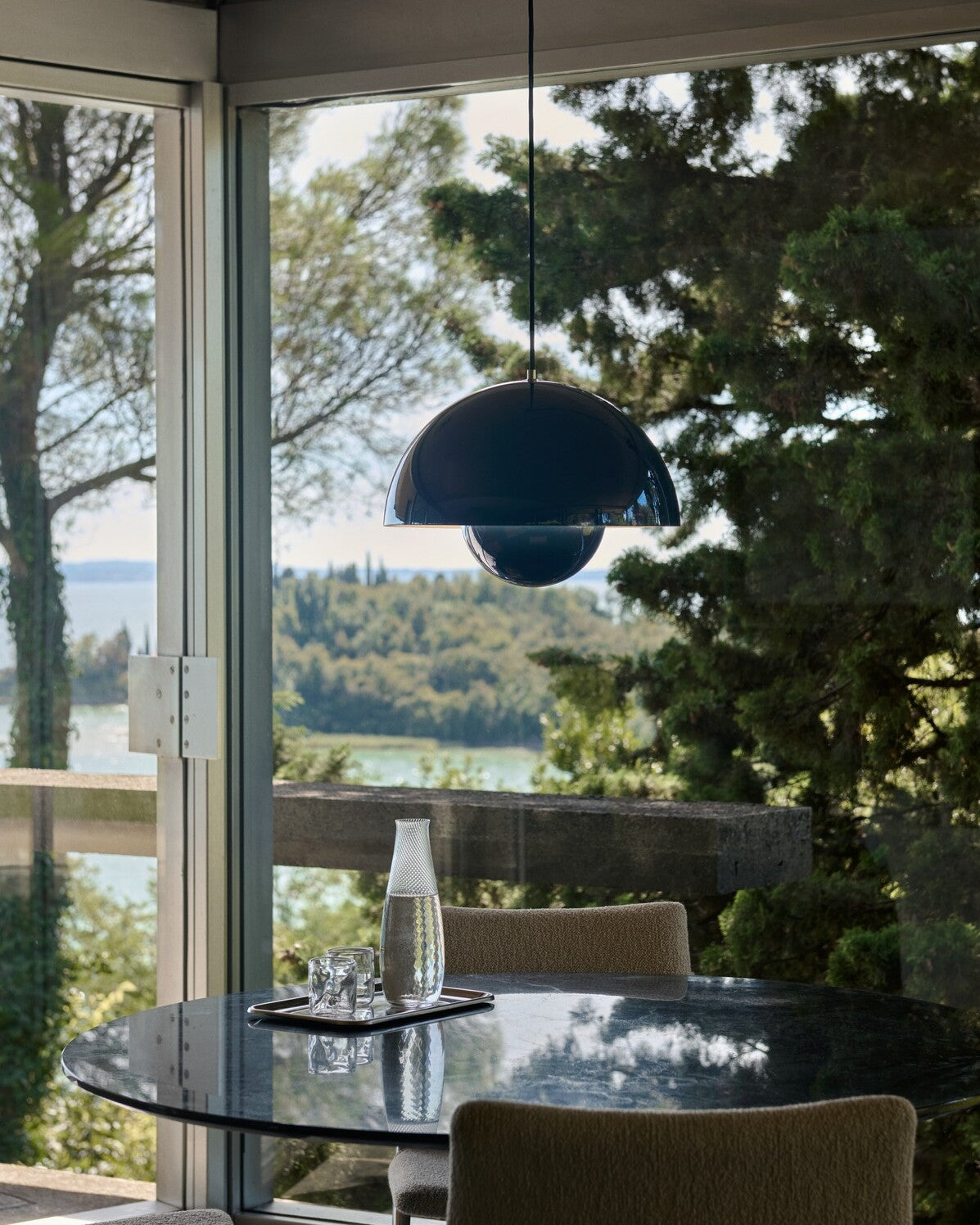
The right height for a pendant depends on what sits beneath it, how the fitting directs light and the sightlines through the room. Rules of thumb are useful, but the final position should be tested in the actual space before the cable is permanently shortened.
How high should a pendant hang above a dining table?
A common starting point is to position the bottom of the pendant around 70–90 cm above the tabletop. This usually brings light close enough to the table without blocking the view between seated diners.
Large, visually solid shades may need to sit slightly higher, while a small or translucent fitting can often hang lower. Sit at the table and check the view from every regular position before finalising the height.
How high should pendants hang above a kitchen island?
Above an island or breakfast bar, pendants need to illuminate the surface without obstructing preparation or conversation. A starting clearance of roughly 75–90 cm from worktop to the bottom of the fitting works in many rooms.
Take account of the tallest regular user and the viewing angle across the kitchen. If the island includes a hob, sink or other working zone, follow all relevant product, appliance and electrical guidance rather than relying on decorative-lighting rules alone.
How high should a pendant hang in an open room?
Where people walk beneath a pendant, the lowest point needs safe head clearance. The appropriate height depends on ceiling height, the fitting’s dimensions and the people using the route.
A pendant centred over a coffee table or side table can hang lower because the furniture prevents people walking directly beneath it. This often creates a more intimate pool of light while keeping the route clear.
How many pendants should hang above a table or island?
One large pendant creates a clear focal point. A row of smaller pendants can spread light along a longer surface, while a cluster works best when the fittings have enough space to be read individually.
Base the arrangement on the table or island rather than the room as a whole. Keep the outer pendants comfortably within the ends of the surface and check that cupboard doors, extractor hoods and sightlines remain clear.
For a row, use equal spacing unless the design is intentionally irregular. Mark the positions with tape or temporary plumb lines before drilling.
Does the shape of the shade change the height?
Yes. An opaque shade directing light downwards behaves differently from a translucent globe or an exposed bulb. A concentrated downlight may create glare or a bright hotspot if it is too close to the surface, while a diffused fitting can provide a softer ambient effect.
Check whether the light source is visible from seated and standing positions. The manufacturer’s recommended bulb, diffuser and dimming compatibility all affect the result.
What if the ceiling is unusually high?
With high or pitched ceilings, avoid automatically raising the pendant until it feels lost. Over a table, its relationship with the tabletop is generally more important than its distance from the ceiling.
Confirm that the supplied cable is long enough and that the ceiling rose and suspension method suit the surface. Some fittings require additional cable, specialist suspension or a separate track arrangement.
Should pendant lights be dimmable?
Dimming is useful over dining tables and in open-plan rooms where the same fitting supports both practical and atmospheric lighting. The lamp, driver and dimmer must all be compatible.
Layer pendant light with wall, floor or table lamps rather than expecting one fitting to light the entire room evenly. This gives greater control and reduces harsh contrast after dark.
Before installation
Check the fitting’s dimensions, weight, cable length, light-source requirements and dimming information. Test the proposed drop visually, and ask a qualified electrician to install mains-wired lighting in accordance with the product instructions and applicable regulations.
Choose a pendant that suits both the surface and the room. Explore our pendant lights, or contact us if you would like help comparing size, light direction and cable length.