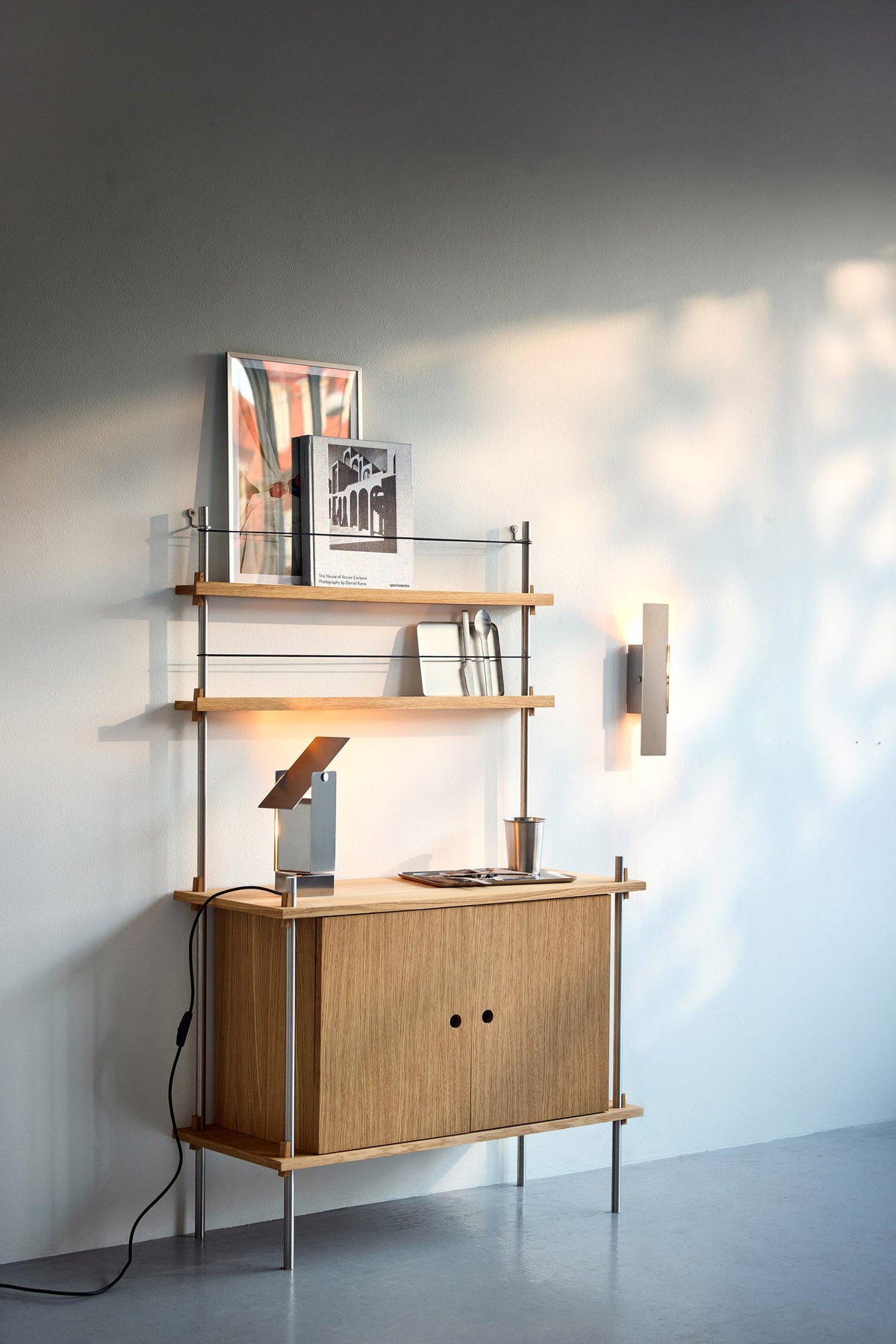
A mirror should be sized for what it needs to reflect and for the wall or furniture beneath it. Its effect depends as much on position as shape: the same mirror can increase light, frame a useful view or reflect something you would rather not emphasise.
What should the mirror do?
A full-length mirror needs to show the body from a practical standing position. A mirror above a console may be more decorative. In a small or dark room, the priority may be reflecting daylight or an open view. Define that role before choosing dimensions.
One mirror can sometimes cover two jobs, but compromises should be tested. A tall mirror above a low console may show most of the body from a distance, while a small decorative mirror will not become practical simply because it is placed in a hallway.
How large should a mirror be above furniture?
Relate the mirror to the width of the console, chest or mantel below it. A very narrow mirror can feel disconnected from a broad piece of furniture; one that overhangs it may dominate the arrangement. Mark the outline on the wall and assess the surrounding empty space.
Include frames and any projecting shelf in the measurement. The visible glass can be noticeably smaller than the stated outer size, and a deep frame casts a different shadow from a thin one. Check that the lower edge leaves room for objects that genuinely live on the surface.
Round, rectangular or irregular?
A round mirror can soften the straight lines of cabinets and doorways. A vertical rectangle gives useful height and may suit a narrow hall. A landscape mirror can widen the visual emphasis above a long console. Irregular forms work best when given enough clear wall around them.
How high should it hang?
Set the height around the people who will use it and the reflection required. Above furniture, keep a visual relationship between the two pieces rather than leaving an accidental gap. For a full-length mirror, test the view at typical standing distances before fixing it.
Do not use average eye level as the only reference in a shared home. Test the reflection for the shortest and tallest regular users. A slight change in height can improve usefulness without upsetting the relationship with nearby furniture.
What will it reflect?
Stand where the mirror will be viewed and look at the opposite wall. Reflected daylight, artwork or greenery can improve the room; a busy shelf, bright screen or doorway may be distracting. Slight changes in height or position can transform the result.
What should you check before hanging?
Confirm the mirror’s weight, fixing points and permitted orientation. Use fixings suitable for the wall and follow the manufacturer’s instructions. Large or heavy mirrors may require professional installation.
Check whether the design is approved for leaning as well as hanging; the two are not interchangeable. In bathrooms, confirm suitability for the environment and keep edges, backing and electrical fittings away from locations the manufacturer excludes.
Choosing your mirror
Choose the reflection first, then size the mirror in relation to the wall and any furniture below. Mocking up the outline is the simplest way to avoid an under- or oversized result.
Find the right mirror for your wall. Explore our mirror collection, or contact us for dimensions and installation information.