A rug should connect the furniture around it rather than appear as a small, separate object in the middle of the floor. Getting the size right usually matters more than choosing the exact colour, so begin with the room layout and the furniture that the rug needs to hold together.
How do you measure for a rug?
Arrange the furniture first, then use masking tape to mark the rug’s proposed dimensions on the floor. Check the outline from the main doorway and walk around it for a day. This quickly reveals whether the rug feels generous, interrupts a door or sits awkwardly close to a wall.
Measure the taped area rather than estimating from the room size. Standard rug dimensions may require a small adjustment to the furniture layout, and the orientation can be as important as the width and length.
What size rug works in a living room?
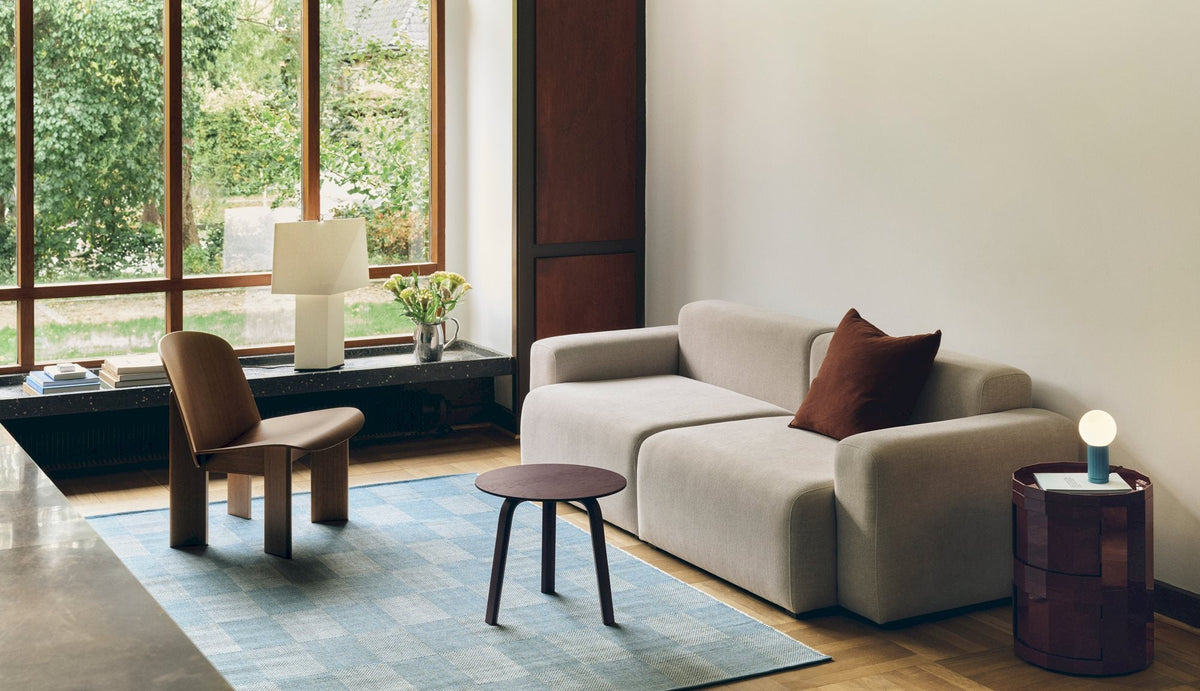
In most living rooms, the rug should relate to the full seating group. A useful arrangement places at least the front legs of the sofa and chairs on the rug. This visually connects the pieces while keeping the rug manageable.
In a larger room, placing the whole seating group on the rug creates a more settled zone. Leave a consistent border beyond the furniture so the rug does not appear narrowly fitted.
A small rug beneath only the coffee table can work in a compact space, but it should still feel deliberate. If its edges finish well inside the sofa and chairs, it may make the seating arrangement look disconnected.
How large should a dining-room rug be?
A dining rug needs to remain beneath the chairs when they are pulled out. Measure the table, then add enough room on every side for a chair to move back without catching the rug edge. Around 60 cm beyond the tabletop is a useful minimum starting point, although deeper chairs may require more.
Match the rug shape to the table where it supports the room: rectangular beneath rectangular, round beneath round. This is not an absolute rule, but it usually creates a clear relationship.
Choose a surface suitable for dining. A lower, denser pile is generally easier for chairs to move across than a deep pile, and the care instructions should suit the likelihood of spills.
What size rug should go beneath a bed?
A bedroom rug should extend far enough beyond the sides and foot of the bed to provide a useful area underfoot. It can sit beneath the whole bed and bedside tables, or begin further down so the top portion remains off the rug.
For a smaller room, runners placed on either side can offer softness without requiring one large rug. Check door clearance and make sure the chosen arrangement does not leave a narrow strip that is difficult to vacuum.
How much floor should show around a rug?
There is no single correct border, but consistency helps. In a room where the rug defines the main furniture group, leave visible floor around it rather than pushing one edge against a wall and leaving a broad gap on another side.
Do not choose a rug solely to maximise exposed flooring. A slightly larger rug often makes a room feel calmer because the furniture reads as one composition.
Which rug construction is right for the room?
Flat-woven rugs are relatively easy to place beneath dining chairs and doors. Tufted or deeper-pile rugs provide more softness and texture, making them well suited to living rooms and bedrooms.
Natural fibres vary in feel and maintenance, while synthetic or blended constructions can offer different performance characteristics. Check the individual care guidance, suitability for underfloor heating and any advice about rotating the rug.
Do you need an underlay?
A suitable rug underlay can reduce movement, protect the floor and add a little cushioning. It should be slightly smaller than the rug so it remains hidden, and it must be compatible with both the rug and the flooring beneath it.
On smooth floors and in busy routes, preventing the rug from slipping is particularly important. Follow the flooring manufacturer’s advice where finishes are sensitive to rubber or other backing materials.
Choosing your rug
Start with the largest practical size for the furniture group, tape it out and then choose construction and colour. A well-proportioned rug gives the room structure while allowing the furniture to sit naturally.
Find the right foundation for your room. Explore our rug collection, or contact us if you would like help comparing sizes and materials.