A dining table needs to seat the right number of people without making the room difficult to use. The best size is determined by three things: the space around the table, the number of everyday seats and how often you need to accommodate additional guests.
How much space should you leave around a dining table?
Measure the room and mark the proposed tabletop on the floor. As a practical starting point, allow at least 90 cm between the table edge and a wall or other fixed furniture where people need to pull out a chair and pass behind it. More space will feel easier in a busy route.
Where nobody needs to walk behind a seated person, a smaller clearance may work, but test it with an actual chair. Remember to include radiators, sideboards, door swings and the depth of kitchen units when identifying the usable area.
How many people can sit at a table?
Allow roughly 60 cm of table edge per person for everyday dining. This gives most place settings and chairs reasonable room, although broad armchairs and generous serving arrangements require more.
A rectangular table around 160 cm long will often seat six, while a table around 200 cm may accommodate eight, depending on its width, leg position and chair size. Treat advertised seating capacities as guidance and compare them with the way you prefer to dine.
Is a round or rectangular table better?
Rectangular tables use long rooms efficiently and provide a clear place at each end. They are easy to position parallel to walls, kitchen islands and other architectural lines.
Round tables encourage conversation and avoid sharp corners in compact or frequently crossed spaces. A central pedestal can make seat spacing flexible, while four splayed legs may reduce usable positions. As diameter increases, the centre can become harder to reach, so very large groups may be better served by an oval or rectangular design.
Square tables suit square rooms and small groups, but become wide quickly as more seats are added. Oval tables combine some of the circulation benefits of a round top with the capacity of a longer table.
How wide should a dining table be?
Width determines whether there is room for place settings on both sides and serving dishes in the centre. A narrower table can work well in a slim room, while a broad table creates a more generous setting but increases the distance between diners.
Check the complete footprint rather than selecting by length alone. A table that seats the right number may still be too wide for comfortable circulation.
Do table legs affect seating capacity?
Yes. Corner legs can limit the usable distance along each side, especially when adding an extra chair. Trestle bases may provide clear corners but restrict feet near the centre. Pedestal tables remove legs from the perimeter, although the base still needs to leave comfortable foot room.
Look at the space between the legs, not simply the overall tabletop length. If you already own the chairs, place them side by side and measure the width they require.
Should you choose an extendable dining table?
An extendable table is useful when everyday requirements and occasional gatherings differ significantly. Check the size both closed and fully extended, where the leaves are stored, and whether one person can operate the mechanism.
Make sure the room can accommodate the extended length while preserving a usable route. Additional chairs also need somewhere to live when the table is closed.
How should the table relate to the room?
Scale is visual as well as practical. A slim top and light base can make a large table feel less imposing, while a substantial timber table can anchor an open-plan room. Consider sightlines, pendant position and the relationship with nearby kitchen or living furniture.
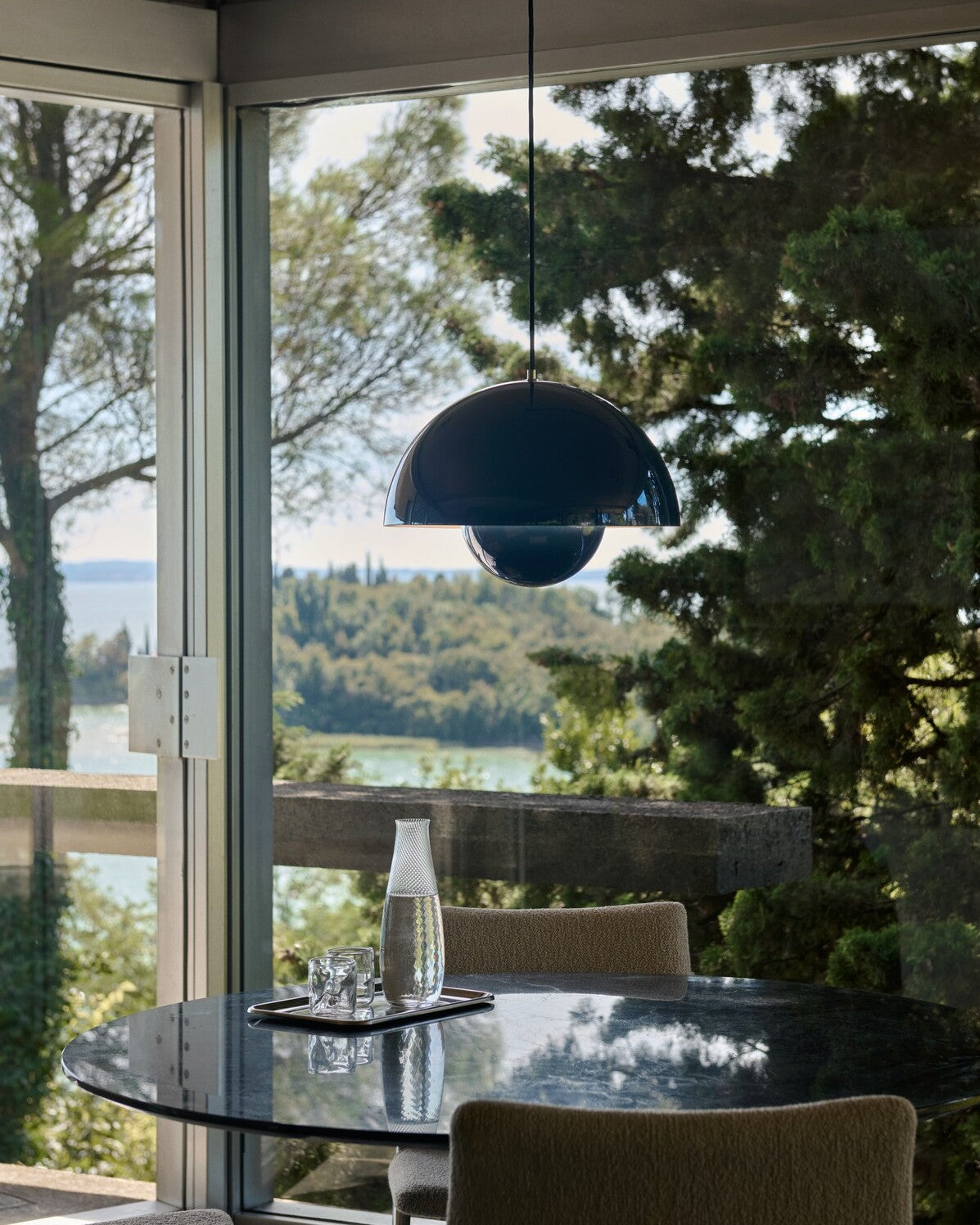
If a pendant hangs above the table, centre it on the table’s usual position rather than automatically using the centre of the room. An extendable table may need a lighting arrangement that works in more than one configuration.
Choosing your dining table size
Decide how many people you seat most days, map the full table and chair zone, and then check occasional capacity. The right table leaves the room easy to move through even when every chair is occupied.
Find a table that fits the room and the way you gather. Explore our dining tables, or contact us for help comparing sizes and base designs.